Brutalism is undoubtedly divisive. Its raw and unapologetic use of concrete has become an appreciated style, but for the inhabitants at the time of construction, many of the brutalist high-rise buildings became known for construction quality issues, poor living standards, and their designs being conducive to crime. However, in the case of the low-rise estates, their designers were working to more progressive ideals, designing in a way that created the same sense of community found on a traditional housing estate whilst still meeting the density requirements demanded of post-war architecture.
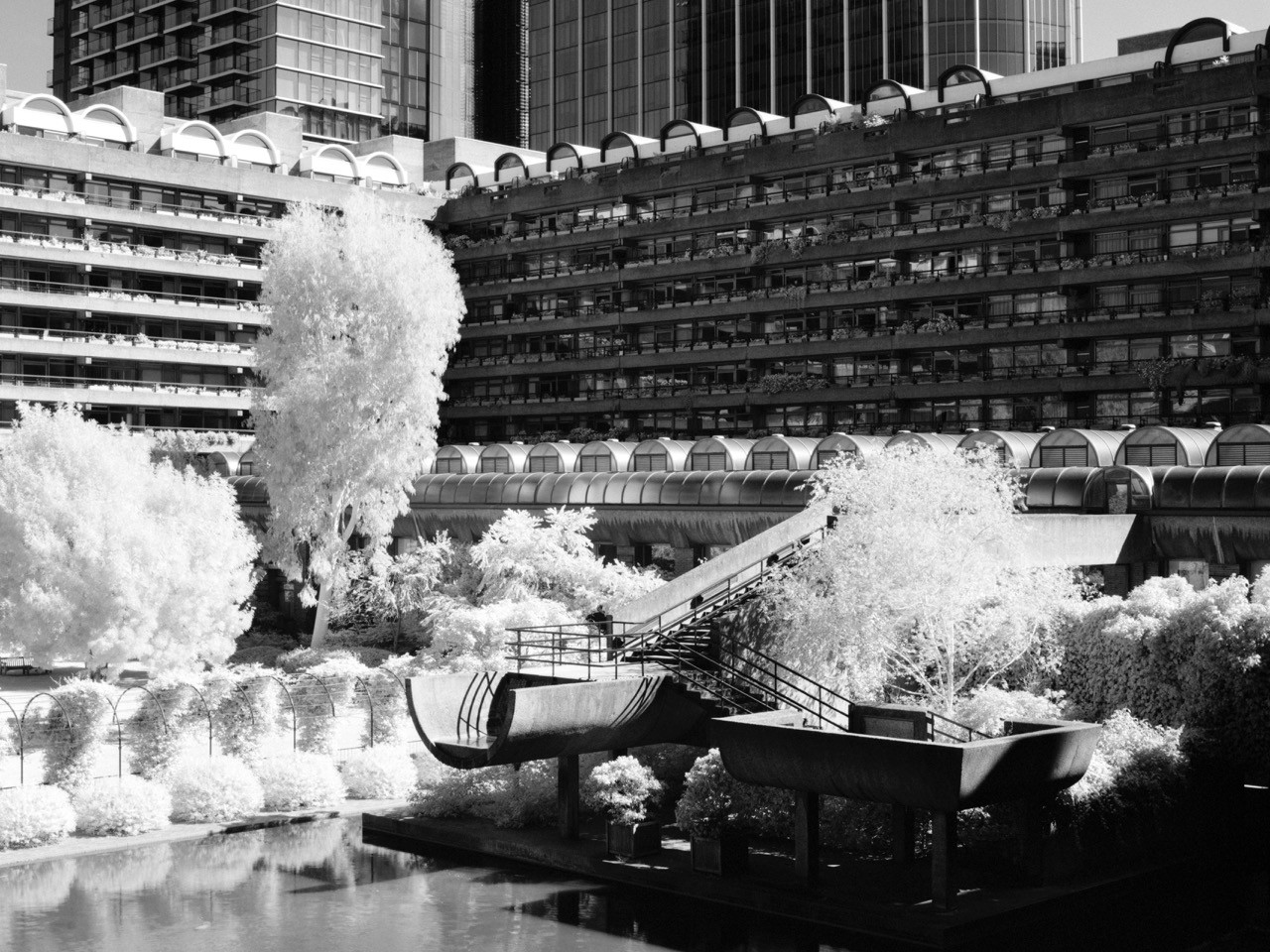
The design of low-rise brutalism provided connection with neighbours and incorporated nature within their design. 'Low-rise' explores these keys to success, documenting several low-rise estates across London; the Alexandra Estate, the Wittington Estate, and the mixed low and high-rise development of the Barbican. Photographs depict the architectural qualities, the openness of the design, and the connection with nature, with the use of infrared film rendering this aspect in a luminous white.
We were working then, not to do social housing, but to do housing. Not to do a site, but to work on the idea of a piece of city, to revitalise and work with the society that was there.
- Neave Brown